
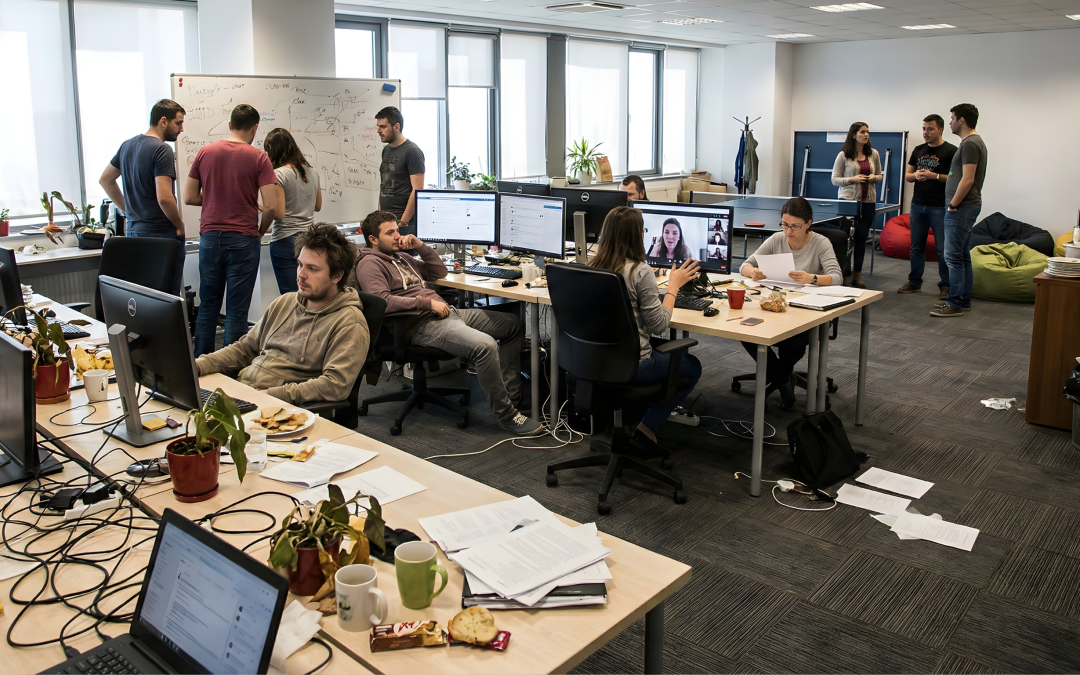
Shared spaces have a… complicated reputation.
For some, they’re full of energy, ideas, and conversations that actually lead somewhere.
For others, they’re synonymous with noise, interruptions, and that perfectly timed “Got a minute?”—right when you were in your best flow.
And then comes the quick conclusion:
“Shared spaces kill my productivity.”
But hold on.
Most of the time, the space isn’t the problem.
It’s the fact that we use it without a system.
A shared space without structure can turn into chaos.
A shared space with a bit of organization becomes a growth engine.
The difference? A few simple habits that completely change team dynamics.
Let’s take a look.
Clearly define work zones
In a shared space, productivity starts with simple, clear rules about what happens where.
For example:
📞 Phone booths – for calls and video meetings (not at your desk)
🧑💼 Meeting rooms – for longer discussions, brainstorming sessions, or client meetings
☕ Lounge areas – for breaks and informal conversations
💻 Your private office or desk (dedicated / hot desk) – for focused work
With private offices, focus comes naturally.
With dedicated or hot desks, your desk becomes your concentration zone — and it works, as long as calls and discussions move to the appropriate areas.
When everyone knows where to go for a call, a meeting, or a break, distractions drop significantly. And the shared space starts working for the team, not against it.
Set “deep work” hours
In coworking environments, the temptation to quickly ask a colleague something is high. But every interruption breaks concentration.
Introduce 2–3 hours daily with no meetings and no spontaneous discussions.
For example:
09:00 – 12:00 = focused work time.
During this window:
avoid scheduling meetings
postpone non-urgent questions
clearly communicate that this is dedicated focus time
You’ll quickly notice the difference in work rhythm.
Make planning visible to the whole team
One of the simplest ways to increase productivity in a shared workspace is clarity.
A few things that help tremendously:
a shared calendar for meetings
a physical or digital board with key tasks
visible weekly goals
clearly defined responsibilities
When everyone knows what they’re responsible for and what the priorities are, 80% of confusion disappears.
And it doesn’t have to be complicated. A simple but consistent system is enough.
Introduce simple team rituals
Structure creates clarity.
A few rituals that work exceptionally well:
a short daily check-in
clear weekly objectives
a brief Friday recap
one meeting-free day
These habits reduce chaos and create predictability. And predictability increases efficiency.
Strategic breaks boost productivity
It may sound counterintuitive, but well-timed breaks improve performance. Productivity doesn’t mean eight straight hours of concentration. The brain doesn’t work that way.
Encourage your team to:
take short breaks every 60–90 minutes
change scenery (lounge area, terrace)
avoid constantly eating at their desks
A well-designed shared workspace offers exactly this kind of flexibility — you can step away, reset, and return with a clearer mind.
Productivity isn’t about exhaustion. It’s about sustainable rhythm.
Use the energy of the community
One major advantage of coworking is collective energy.
Working in a space where people are building projects, launching ideas, and growing businesses creates a natural motivational effect.
Plus:
you can get quick feedback
you can find solutions to challenges
unexpected collaborations can emerge
Networking in a shared workspace isn’t about small talk. It’s about real opportunities.
Team culture matters more than the space
You can have the most modern shared workspace in the world, but without internal clarity, there’s no real productivity.
Ask yourselves:
Does everyone know what they’re responsible for?
Are priorities clear?
Do we respect each other’s time?
Do we communicate effectively?
The space is the framework. Culture is the engine.
Conclusion
A shared space can be chaos — or it can be a growth engine. The difference lies in how it’s organized.
At aSpace, our spaces are designed to support productivity, not disrupt it.
We offer:
dedicated phone booths for calls
meeting rooms that are easy and quick to book
lounge areas for real breaks
a dining area (so no one has to eat shawarma at their desk 😄)
private offices for teams
dedicated desks and hot desks for freelancers or flexible teams
Whether you’re a large team or just starting out, there’s a setup that helps you work better.
Choose one of the six aSpace locations and book a tour.
You might discover that the problem wasn’t the space — but how it was being used.
Recent Comments